

Brick or stone arches can add tremendous curb-appeal to any building, and have become increasingly popular in Dallas/Fort Worth home building since the 1980’s.
However, many builders and masonry contractors have failed to properly apply the basic principles that insure a lasting and aesthetically pleasing design.
Countless arches in local metroplex homes are developing cracks and have loose brick or cast stone, or are falling down completely due to design flaws.
Let’s explore the types of Arches
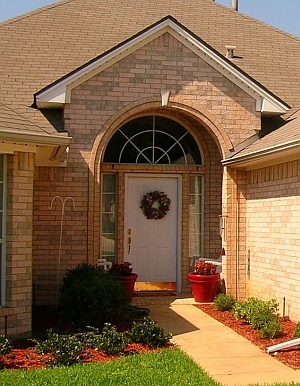
First, here are semicircular arches
A semicircular arch has a true half-circle shape and effectively transfers the weight above the arch to the shoulders (abutments). They are also called parabolic arches.
Here is an example of a typical brick parabolic arch, beautifully framing this home’s entry way.
Therefore, in most cases the semicircular arch is structurally self-supporting. However, a major arch (spanning more than six feet) supported only by narrow columns of 12-16” wide—or abutments that are built on separate foundations—can cause even this structurally preferable design to fail.
Below you will see examples of semi-circular arches which have failed because of support failure


Segmented or “Eyebrow” Arches are by far the most popular

A segmental arch should not be built, for example, between narrow, unsupported columns.
The even more popular segmental arch (also descriptively called “eyebrow” arch) has a much flatter shape and imposes considerable sideways thrust on its abutments, which must be substantial enough to withstand this pressure.
The flatter and wider the arch, the more likely it is to develop problems, unless it is provided additional structural support.
Eyebrow arches create an elegant look, but are more apt to develop problems than other designs.
Repair Methods for Brick Arches
Some may involve changing the dimensions or shape of the arch, or reinforcing the cavity inside the arch in order to gain structural advantages; others may need to be eliminated altogether in favor of a flat opening, with lintels to support the weight above.
Minor settling cracks above arches may not require extensive re-design work, but loose brick or cast stone can be quite dangerous and may require a broader scope of repair. Through the help of several structural engineers over the past 20 years, Brick Doctor has developed several arch repair techniques that have proven effective, even on the most difficult arch failures.


Here are images of an extensive eyebrow arch repair project


Here are a couple of arch way repair projects to give perspective on repair techniques


How Can We Help You?
Over the years, Brick Doctor has done just about everything when it comes to repairing and restoring brick arches and archways. We know what we are doing. Let us know if we can help you.
Don’t take our word for it. (Check out our Testimonials) or look over our reviews in our footer. Or, even better, ask a neighbor for a recommendation. We have done tens of thousands of jobs all over the DFW Metroplex since 1986, including some of your neighbors.
Have any particular questions or concerns about a brick arch at your home? We can help.
We look forward to assisting you. Reach out today. Contact us